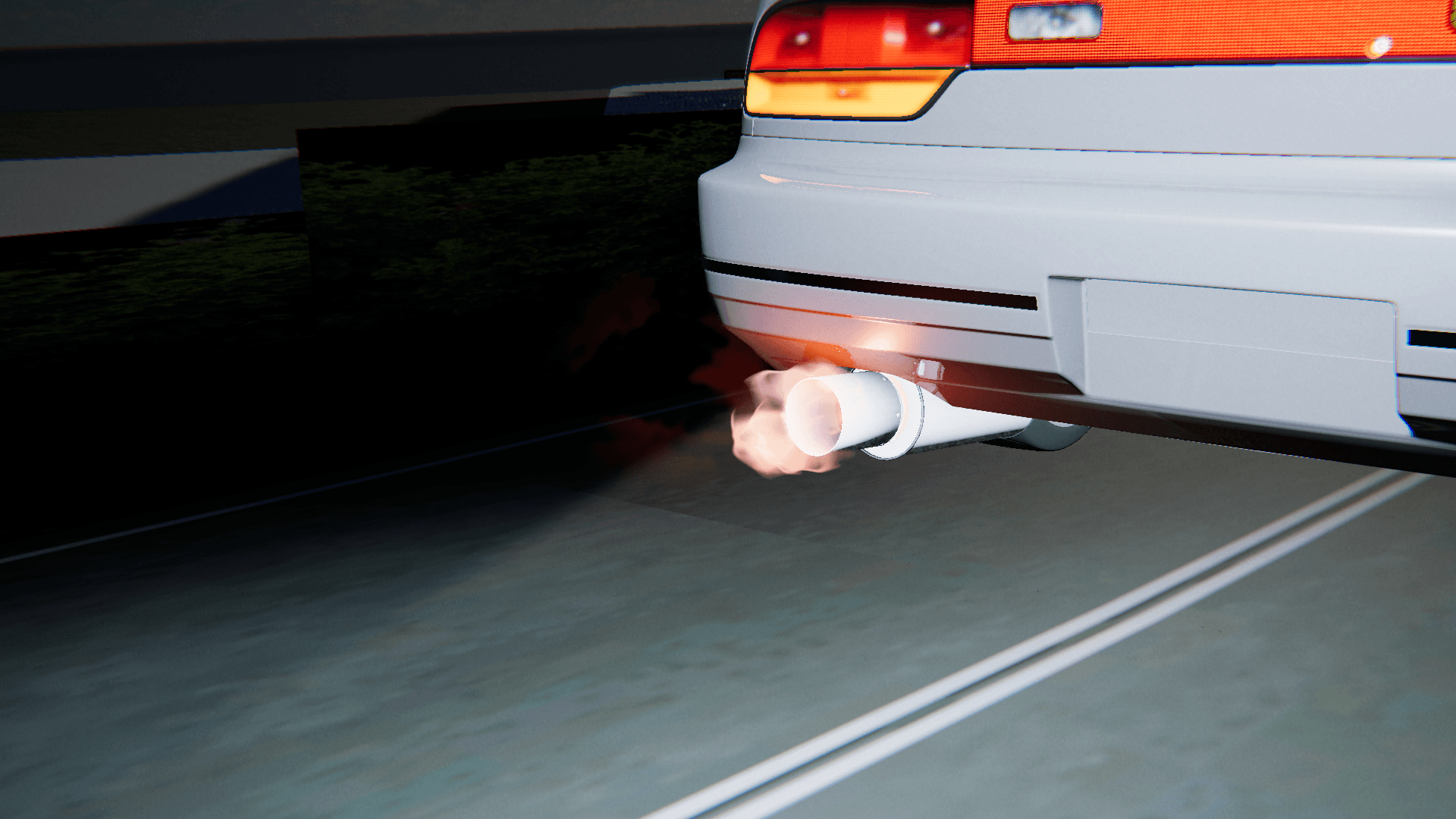
Devlog 021 / Physics
One Steering Rack, Every Input
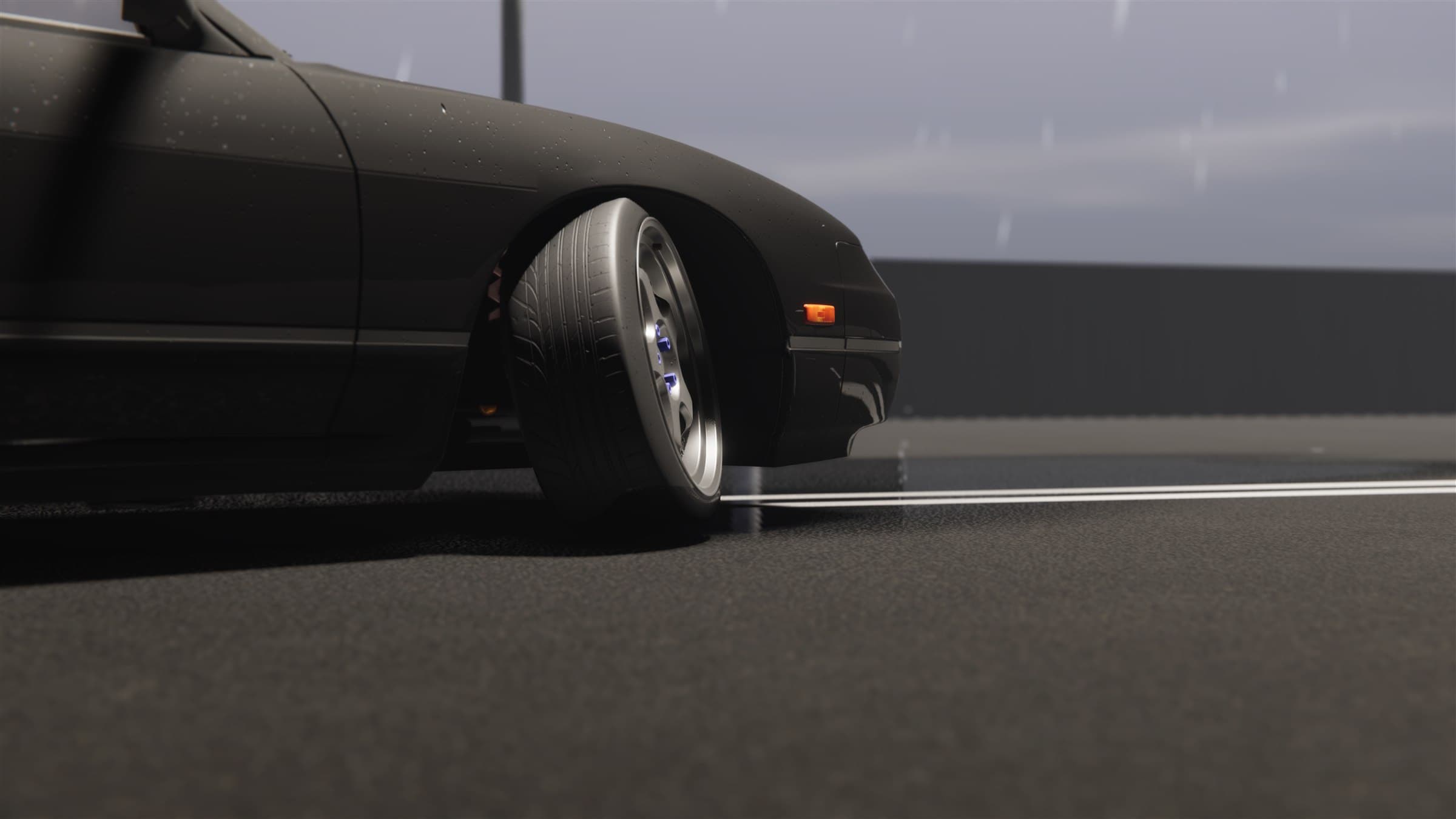
Steering in Project Tourge used to be influenced by several systems at the same time. The tyres were trying to move the rack, a separate centering behaviour was pulling it toward the middle, controller filtering was changing the requested angle, and drift logic could suddenly open or restrict the available steering.
Each part existed for a reason, but together they did not behave like one steering system. They could fight each other, delay the player's input and then release it all at once. The result was the exact opposite of what steering should be: difficult to read for reasons that had little to do with the car.
This update replaces that collection of competing behaviours with a much clearer foundation. There is now one physical steering rack. The tyres decide where it naturally wants to settle, and every input device communicates with that same rack.
What needed to change
The previous steering could feel slow at first and suddenly wake up later in the same movement. In some situations the wheel would oscillate left and right because different systems disagreed about where it should be. A transition from normal driving into a drift could also feel like the game had visibly changed modes.
Controller input had another problem: part of the analog stick could become effectively useless. The front tyres might reach the useful limit of their steering before the stick reached the edge, leaving the remaining travel with nothing meaningful to control. Fixing that by simply allowing more steering would create the opposite issue and make it too easy to overwhelm the front tyres.
Those were not problems that could be solved well by adding another correction layer. The relationship between the player, the rack and the tyres needed to be simplified.
The tyres now own the equilibrium
The physical foundation begins at the front tyres. Their slip, load, contact with the road and the geometry connecting them to the suspension all contribute to the forces that reach the steering rack.
Caster, mechanical trail and the behaviour of the tyre's contact patch help the wheels find a natural direction. As the car loads up, loses grip or begins to slide, that direction changes. The rack responds to what the front tyres are doing instead of following an artificial countersteer target chosen by the game.
This distinction is important. Physical self-aligning torque is still present because it belongs to the tyre and steering geometry. What has been removed is the extra behaviour that tried to steer the car for the player or constantly drag the rack toward geometric centre regardless of the situation.
The car is therefore allowed to find its own steering equilibrium. The player's job is to communicate with it and decide what happens next.
One rack for every input
A direct-drive wheel, controller and keyboard are very different devices, but they no longer lead to different underlying steering physics.
With supported wheel hardware, the player's steering position has the most direct relationship with the rack. Force feedback then communicates the response coming back through the front tyres and steering geometry.
A controller uses the same rack, with analog shaping and smoothing suited to the short movement of a thumbstick. This does not select a countersteer angle or drive the car on the player's behalf. It gives a small physical input enough resolution to control a full steering system.
Keyboard input also reaches the same rack. Because a key can only be pressed or released, it needs controlled buildup and return rather than the analog treatment used by a stick or steering wheel.
The input layers are different because the hardware is different. The car beneath them is not.
Steering range that follows the tyres
During normal driving, more steering angle does not always mean more turning. Once the front tyres have reached what they can currently use, adding lock mainly creates more slip and understeer.
The new controller behaviour reads that usable boundary and maps the complete analog-stick movement across it. The centre of the stick still means straight ahead, while the edge represents the steering range the front tyres can meaningfully use in the current situation.
That range is not one fixed number. It changes with speed, tyre compound, load, road conditions, suspension movement and the amount of slip already present at the front axle. A higher-grip tyre on a loaded corner can accept a different request from a worn tyre crossing an uneven or wet surface.
The purpose is not to hide steering lock from the player. It is to make every part of the analog stick useful while avoiding a situation where half of its travel only adds front-tyre scrub.
More precision without less authority
High-speed driving exposes how little physical movement a thumbstick has. A small movement can represent a large change at the road wheels, making precise placement unnecessarily difficult even when the player understands what the car needs.
The response around the centre of the stick is now more progressive as speed rises. Small movements request smaller steering changes, giving the player more room to make corrections and settle the car.
Full stick still reaches the complete steering range currently available. Maximum authority has not been reduced; the useful resolution has been redistributed so the player can access it with more control.
Countersteering without scripted drifting
Drifting asks the rack to handle two very different actions. Countersteering to catch and balance a slide must be responsive. Steering back toward the direction of the slide needs to be more deliberate, because a tiny thumb movement should not suddenly throw the front wheels toward centre.
The new input handling treats those intentions differently without choosing the drift for the player. Countersteering remains fast enough to catch the car, while direct steering is smoother and easier to place.
When the car is genuinely sliding, the rack also stops fighting so aggressively to return to geometric centre. It can settle around the direction created by tyre forces, steering geometry and the state of the car. There is no invisible ideal countersteer angle being followed underneath the player.
This means the steering can support a drift without becoming drift steering. The tyres still create the answer, and the player still has to find it.
No more visible mode switch
The old system could cross a boundary and immediately change from a restricted normal-driving range to the full steering available for a drift. From the driver's seat, that felt like the steering had suddenly been released.
The rack boundary, available range and input response now change progressively. As the car moves from grip into slip, the steering opens with it instead of switching behaviour in a single physics update. The same is true when the car recovers and returns to normal driving.
A small slide also no longer unlocks full mechanical countersteer immediately. Extra range grows with the angle and state of the drift. Early corrections stay within a useful tyre-safe area, while a committed high-angle drift can still access the lock needed to hold it.
The player keeps the speed needed to catch the car. What disappears is unnecessary angle arriving before the situation actually calls for it.
Reverse is still reverse
Driving backward changes the relationship between wheel direction, travel direction and the way a slide is interpreted. The steering rack and tyre forces remain physical, but forward-driving drift behaviour should not be carried into reverse and pretend that the situation is the same.
The forward-only handling now fades away smoothly when the car travels backward. Reverse remains connected to the same rack without inheriting drift decisions that only make sense while moving forward.
Why this is a better foundation
The largest improvement is not one new controller curve or a stronger force-feedback effect. It is that the steering finally has a clear owner.
Tyre physics determines the natural steering equilibrium. The rack carries that result. Force-feedback hardware communicates it, while controller and keyboard layers translate limited input devices without inventing another version of the car.
That makes the system easier to understand as a player and easier to improve during development. If a car behaves differently with another tyre, steering-lock geometry or suspension setup, that difference can come from the vehicle rather than a collection of hidden steering modes.
There is still testing ahead across different cars, tyres, force-feedback strengths, road surfaces and moments where the front wheels become lightly loaded. Those tests will continue to shape the tuning. The important part is that they are now tuning one coherent system instead of negotiating between several systems that want different things.
For normal driving, the rack should feel calm and precise. At speed, it should give the player room to make small corrections. During a drift, it should move naturally without completing the work for them.
One rack, one car and the same physics beneath every input.
Development archive