Devlog 020 / Engine
Fuel, Fire and Afterfire
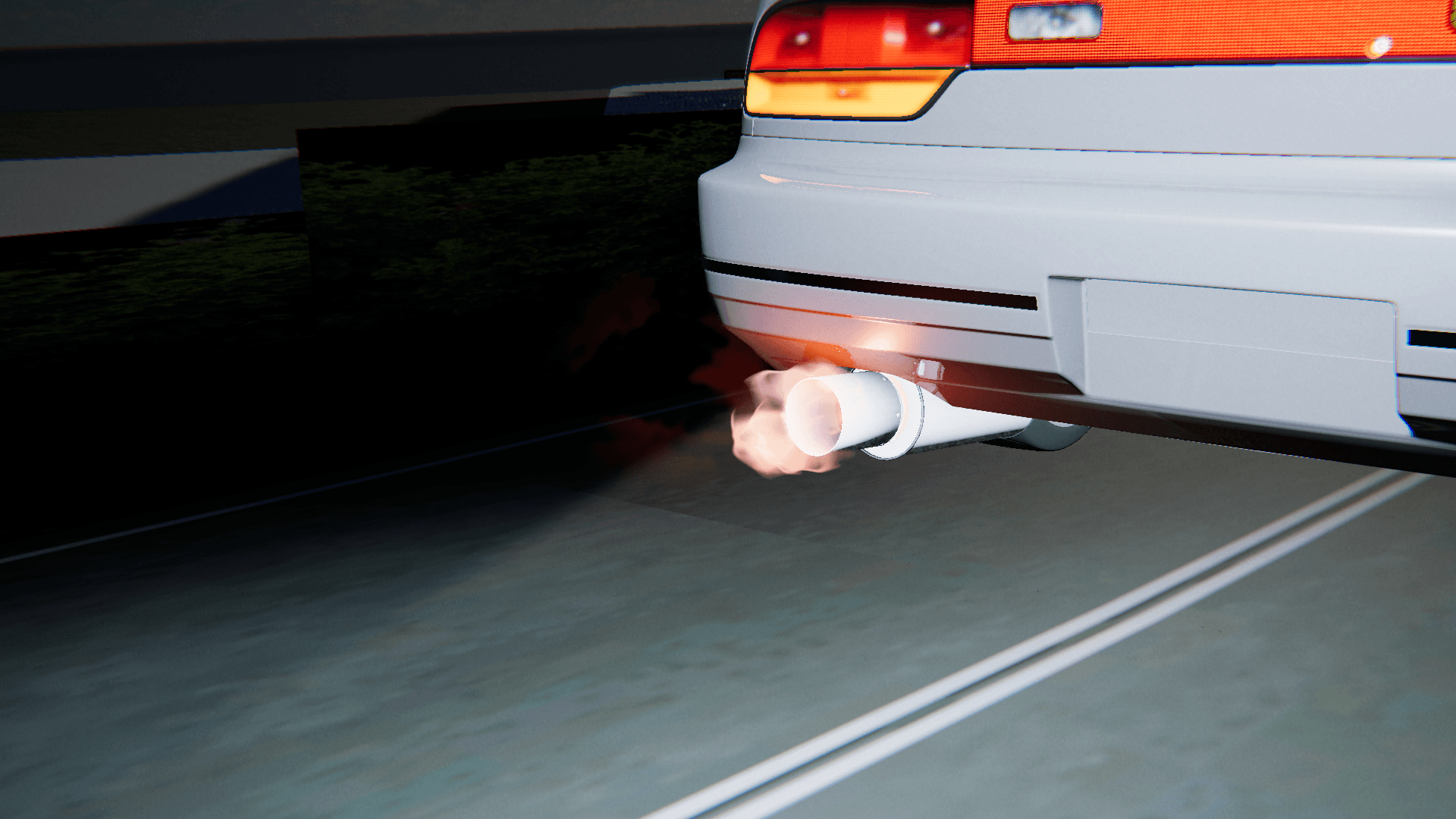
Exhaust flames are no longer a visual effect chosen from a preset. The fuel in the tank, the way the engine is tuned and what is happening inside the engine now decide what comes out of the exhaust.
This update adds methanol as a proper fuel, connects ECU mapping to the exhaust system and rebuilds afterfire so that different combustion states produce visibly different results. The goal is not simply to make bigger flames. It is to make the exhaust another readable part of the car.
Methanol is now a real fuel
Project Tourge now treats methanol and gasoline as separate fuels. Cars begin with gasoline, and running methanol requires the Methanol/Gasoline Flex-Fuel Conversion together with a Stage 3 standalone ECU and Stage 2 fuel system.
Once the conversion is fitted, the player can choose gasoline or methanol at a gas station. Changing fuel is a real service decision: if there is already fuel in the tank, it must be drained and the system flushed before the other fuel can be added. The selected fuel and the amount remaining are remembered for each owned car, and the conversion cannot be removed while methanol is still in the tank.
The difference is deeper than a label in the fuel menu. Methanol requires considerably more fuel volume for the same work, produces far less soot and gives a tuned engine more protection against knock. Those advantages come with the cost of increased consumption and the supporting hardware needed to use the fuel correctly.
The ECU now reaches the exhaust
The custom ECU already gives players control over fuel mixture and ignition timing across engine speed and load. Those maps now influence the exhaust as well as the way the engine performs.
The game reads the current point between the surrounding cells instead of jumping abruptly from one setting to another. That live tune affects torque, knock risk, exhaust temperature, afterfire and smoke. A rich area of the map should therefore behave and look different from a lean, hot area. Retarded ignition can leave more heat in the exhaust, while a sensible calibration produces a cleaner result.
Changing fuel does not throw away the work put into a tune. Saved maps are translated to preserve the intended mixture when moving between gasoline and methanol, rather than copying gasoline values directly into a fuel that needs a very different calibration. Tunes remain saved through the player's profile, so selling a car does not mean losing the work behind them.
The flame tells you what is happening
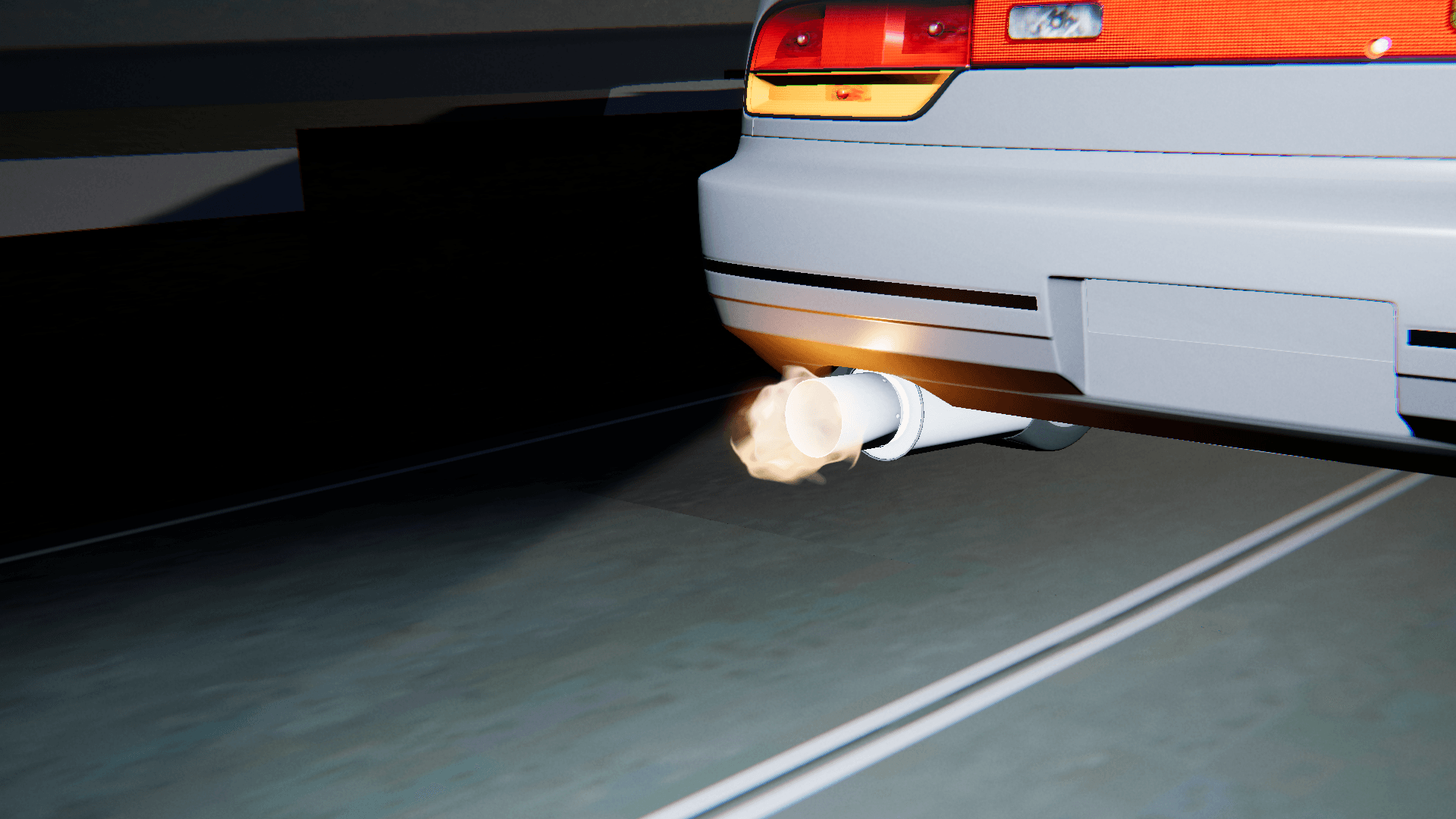
The screenshots below use the same car and viewpoint. The important difference is the combustion state behind the event.
Balanced gasoline
A gasoline tune operating near its intended mixture creates the familiar yellow and amber afterfire. The event is relatively clean, with an ordinary pop and limited soot.
Rich gasoline
Extra fuel produces a deeper orange and red flame. It also increases the chance of afterfire and creates a darker, sootier exhaust. A deliberately rich tune can therefore be obvious from outside the car, but it is not a free visual upgrade.
Lean and hot gasoline
A leaner and hotter combustion state creates a smaller pale blue-violet flame with less smoke. It can also bring the engine closer to misfire or knock, so the cleaner-looking exhaust does not automatically mean the tune is healthier.
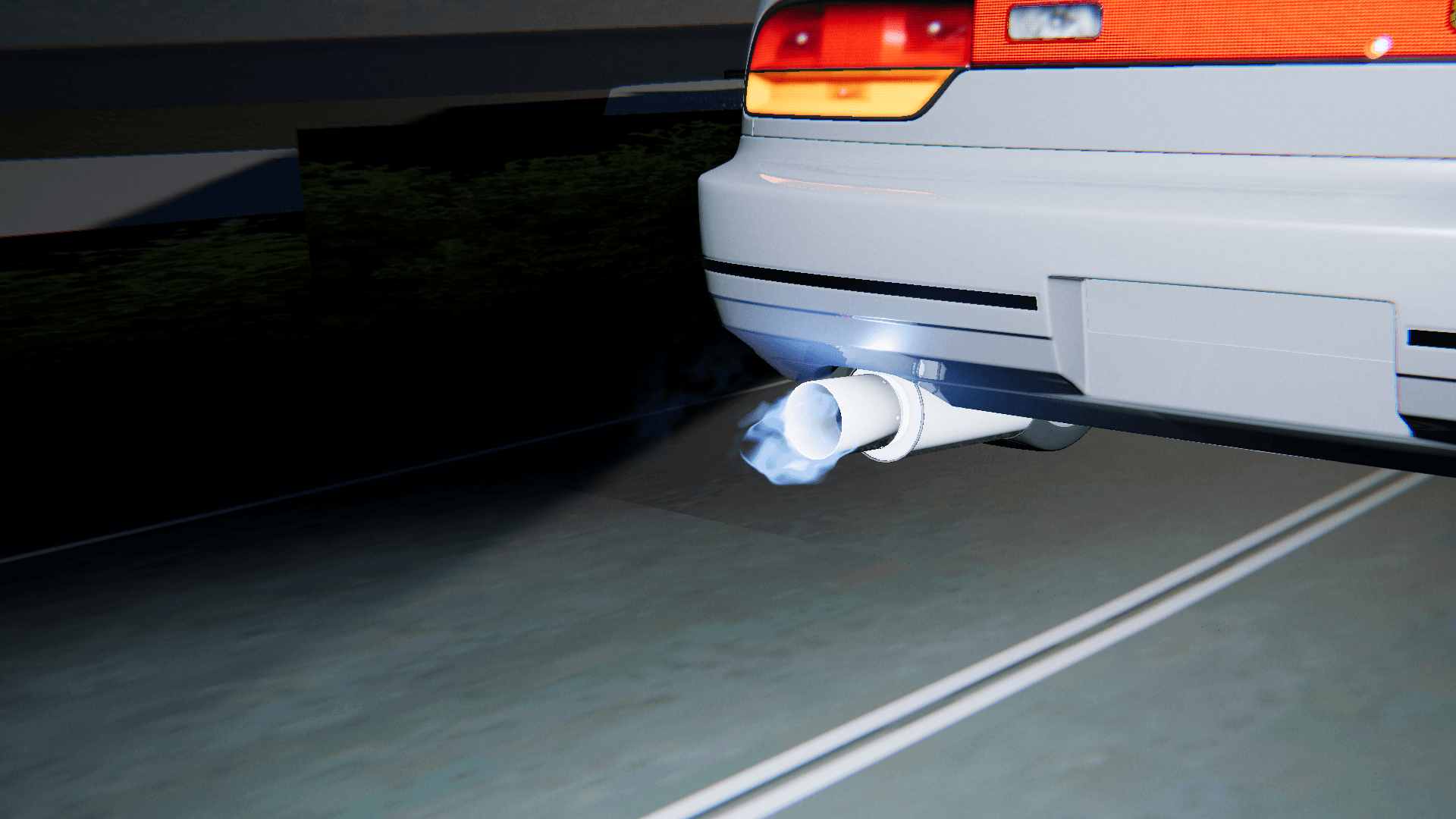
Methanol
Methanol burns with a pale blue to blue-white appearance and produces very little of the dark residue associated with rich gasoline. The result is visibly cleaner and colder in colour, while still reacting to the actual ECU tune.
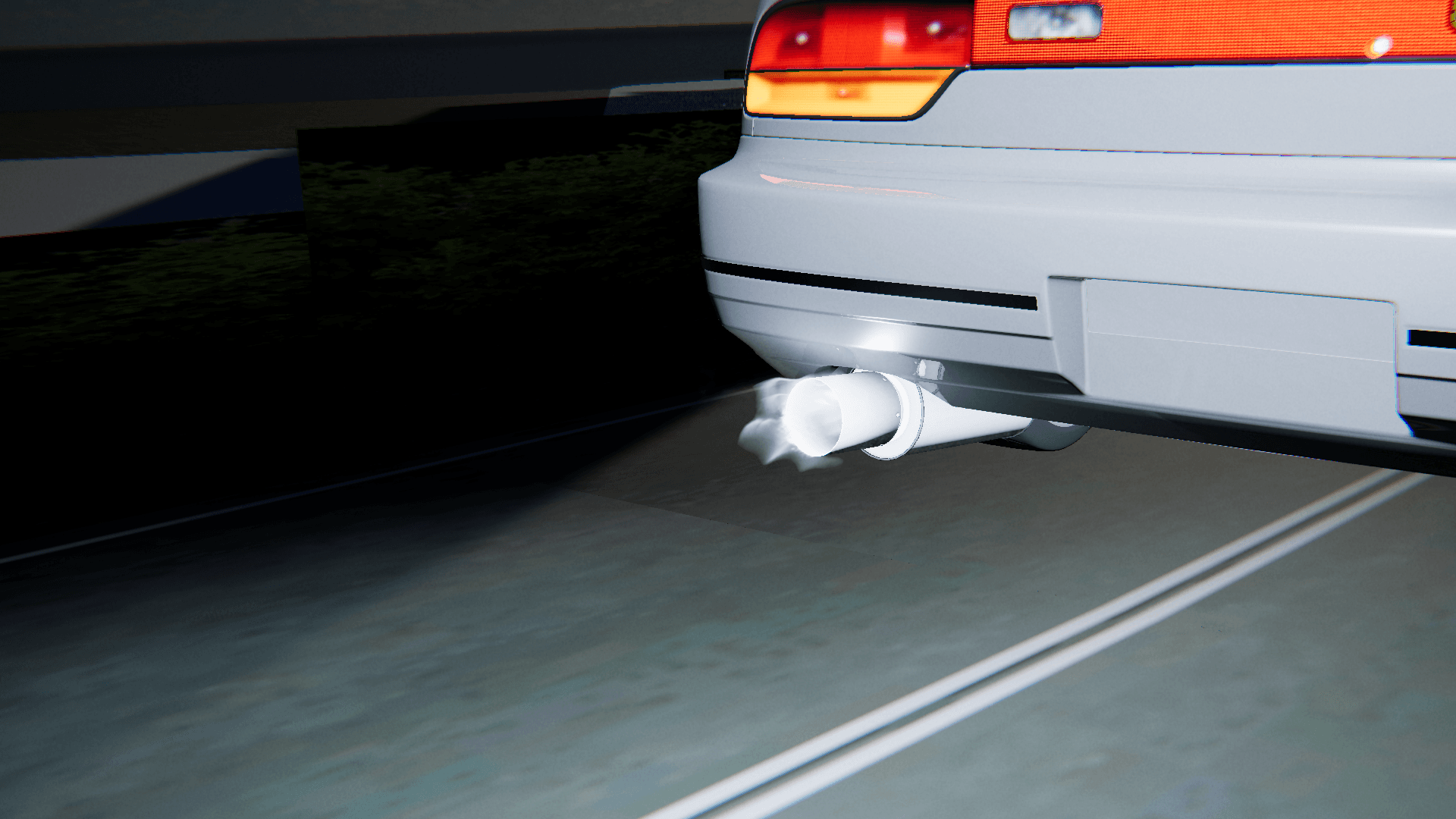
These are not four skins for the same effect. Fuel, mixture, timing and exhaust heat choose the character of the event. The appearance is a consequence of the build and its calibration.
Anti-lag is not a colour preset
Anti-lag makes afterfire more frequent, larger and longer, but it does not replace the rules above. Gasoline, methanol and the ECU tune still determine the body of the flame.
What anti-lag changes is the violence of the event: how quickly it occurs, how long it remains, how fast the flame travels, how turbulent it becomes and how strongly it lights the area around the exhaust. Larger events can develop a short blue-hot reaction near the exhaust tip before the main flame forms.
That distinction matters. Two cars can both have anti-lag and still look different because their fuel and calibration are different. Anti-lag should amplify the engine's state, not hide it behind one universal effect.
Flames that belong in the scene
The previous rigid shape has been replaced with short, irregular flame tongues. They stretch with their movement, expand unevenly and use turbulence so the event reads from the side as well as directly behind the car.
The system also includes a compact reaction layer close to the exhaust tip, emissive light that reaches the bumper, visibility compensation for daylight and heat haze driven by exhaust temperature. Smoke changes with the same conditions: rich gasoline can leave a darker trail, lean combustion produces less smoke, and methanol remains much cleaner.
All of this is still being tuned. The aim is a fast event with enough structure to look convincing without turning every throttle lift into a flamethrower.
Previewing anti-lag in the tuning shop
Players can preview anti-lag while the tuning panel is open. The car can fire the system in neutral so a player can hear and see how the current setup behaves before leaving the shop.
The preview still requires the correct standalone ECU and anti-lag hardware, and the engine must be used in the right way to trigger it. It only accounts for the road load a stationary car cannot create, then returns the system to its normal behaviour when the tuning panel closes.
This is a preview of the installed build, not a separate showcase effect. Change the fuel or calibration and the preview changes with it.
Saved between drives and synchronized online
The methanol conversion, fuel in the tank, ECU tune and anti-lag setup all persist between sessions. Returning to an owned car restores the systems that make that particular build behave the way it does.
Multiplayer carries the result to the other players in the session. When an afterfire event happens, remote cars reproduce the same overall fuel and combustion character instead of choosing a random local flame. A methanol car remains recognizably different from a rich gasoline build, and the timing of the event stays connected across the session.
Why connect all of this
Afterfire is easy to treat as decoration. In Project Tourge, I want it to be the visible end of several systems the player can actually work with.
Choosing methanol changes how the car must be supported, tuned and refuelled. ECU work changes performance, safety and the exhaust. Anti-lag adds another layer without erasing the identity of the fuel beneath it. Even a short flame can tell the player something about the engine that produced it.
The result is more useful than simply adding a bigger effect. It gives engine builders another reason to understand their tune, gives different builds their own character and makes the car communicate what is happening without opening a menu.
Development archive