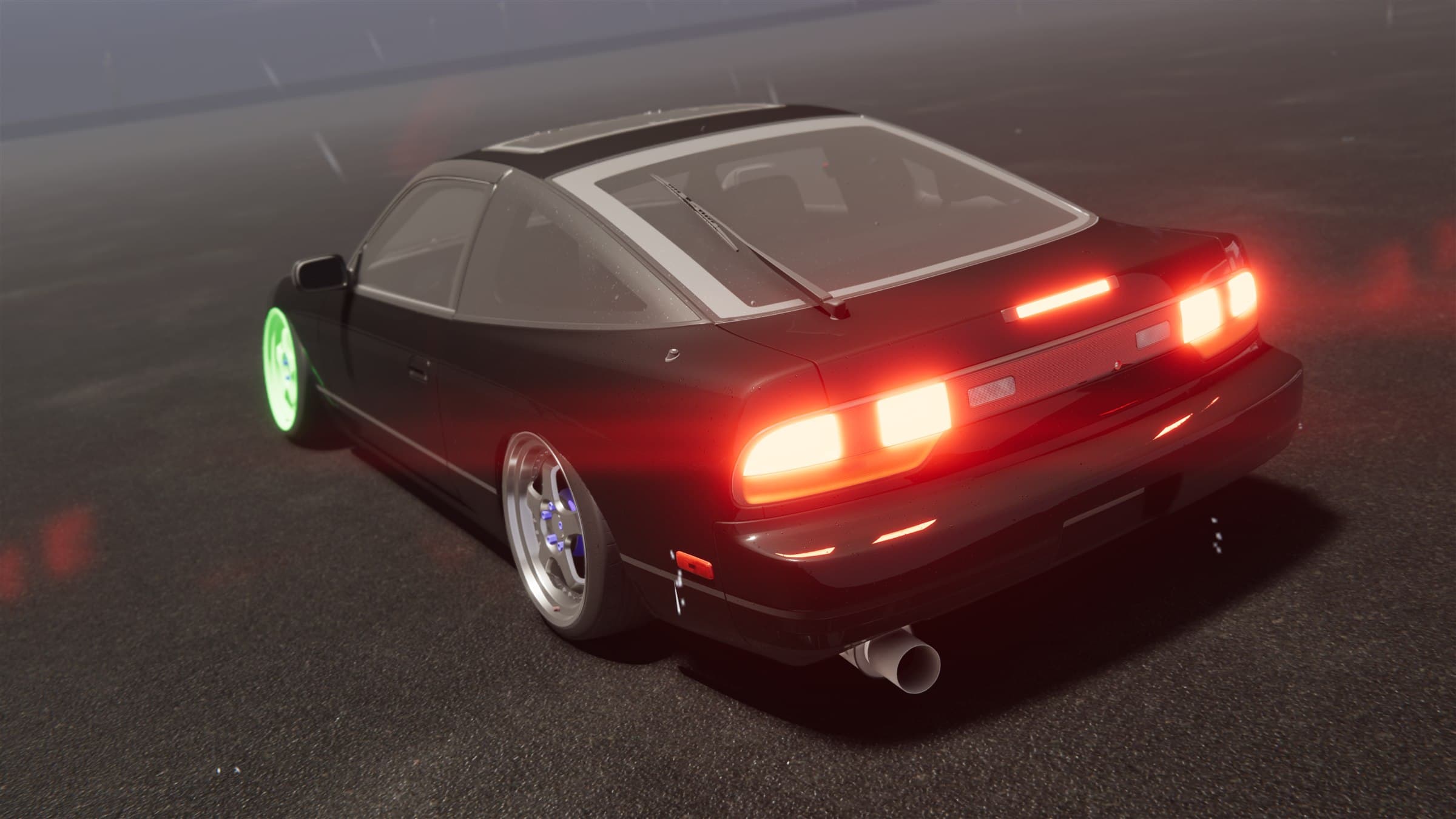
Devlog 006 / Physics
Tyre Model
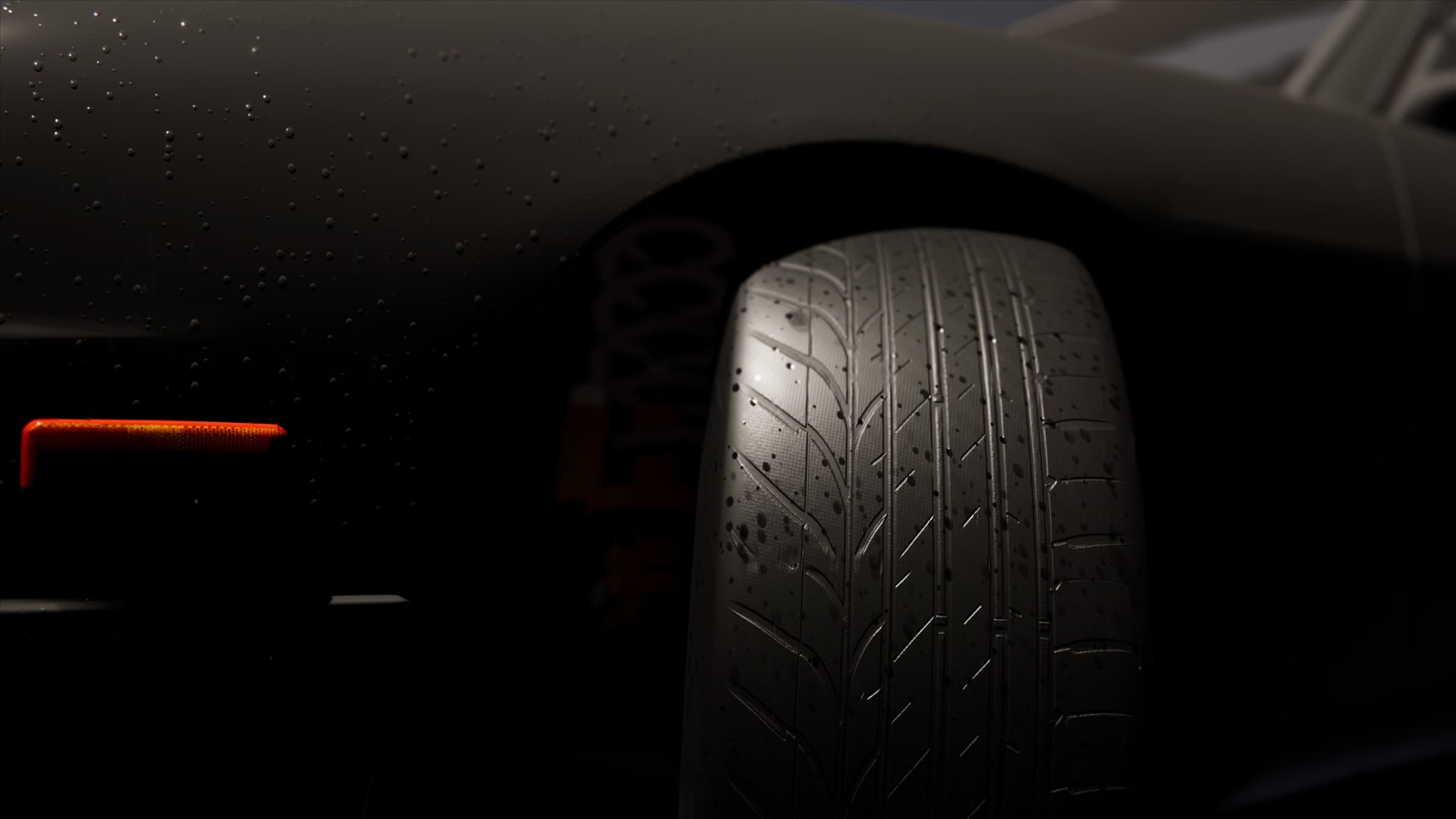
The tyre model is where the car meets the road. Acceleration, braking and steering all depend on the forces available at four small contact patches, and each tyre has to respond to several demands at once.
Two directions of force
Project Tourge separates longitudinal and lateral tyre behaviour. Longitudinal force covers acceleration and braking. Lateral force is what turns the car through a corner.
Both follow curves rather than switching between grip and no grip. Force builds as the tyre is asked to work, reaches its strongest area and changes again when the tyre is pushed into a slide. The shape of a curve affects initial response, the approach to the limit and the behaviour beyond it.
This lets two compounds feel different even when used for the same kind of driving. One can build force progressively and remain easy to read, while another can respond more sharply and demand better preparation.
Combined grip
A tyre does not keep separate reserves for braking and cornering. If it is working hard in one direction, less remains available in the other.
Braking into a corner asks the front tyres to slow and turn the car together. Applying power while cornering creates the same competition at the driven tyres. If the total demand becomes too high, the tyre begins to slide.
This is why technique changes the result. Releasing the brake can return cornering ability to the front axle. Managing throttle can help a rear tyre recover or maintain a controlled slide. The model responds to how an input is introduced and removed, not only its final position.
Load and steering feel
Adding load to a tyre allows it to produce more total force, but not in a perfectly equal proportion. Weight transfer therefore changes the balance of available grip across the car rather than simply giving the loaded axle a free advantage.
The front tyres also produce self-aligning behaviour as they build cornering force. That response reaches the steering rack and helps communicate the approach to the limit. As the tyre moves deeper into a slide, the steering feeling changes with it.
The tyre is not rigid
Tyres deform as the forces acting on them change. The sidewall and contact area move under acceleration, braking, cornering and heavy impacts instead of behaving like a solid extension of the wheel.
This is not only a visual detail. Deformation affects how the tyre accepts load, how quickly the car responds and how clearly the driver feels the transition into grip or a slide. A tyre that flexes more can make an input feel softer and more progressive, while a stiffer tyre can respond more directly but give the driver less room to be careless.
Pressure, tyre construction and the load carried by each corner all influence that behaviour. The result connects deformation with the rest of the tyre model, so a setup change can alter both what the tyre is doing and how the car feels from the driver's seat.
A tyre has a condition
Compound, pressure, temperature, wear and road surface all affect the response. A cold tyre can behave differently from one in its working range. Pressure changes support and response. Wear reduces ability over time, while water changes the relationship between the compound and the road.
Each corner keeps its own condition. The front and rear axles can therefore develop differently during a drive, and one damaged tyre can alter the balance of the whole car.
What we mean by accuracy
Project Tourge does not claim to reproduce every microscopic process inside real rubber. The aim is a physically grounded model with connected, believable consequences.
We judge it by the drive: whether weight transfer matters, whether braking and steering compete naturally, whether the limit can be understood and whether setup changes produce a result the player can recognise.
The tyre model should explain the car at the limit without needing to explain its mathematics.
Development archive