Devlog 004 / Vehicle systems
Fuel, Tyres and Gas Stations
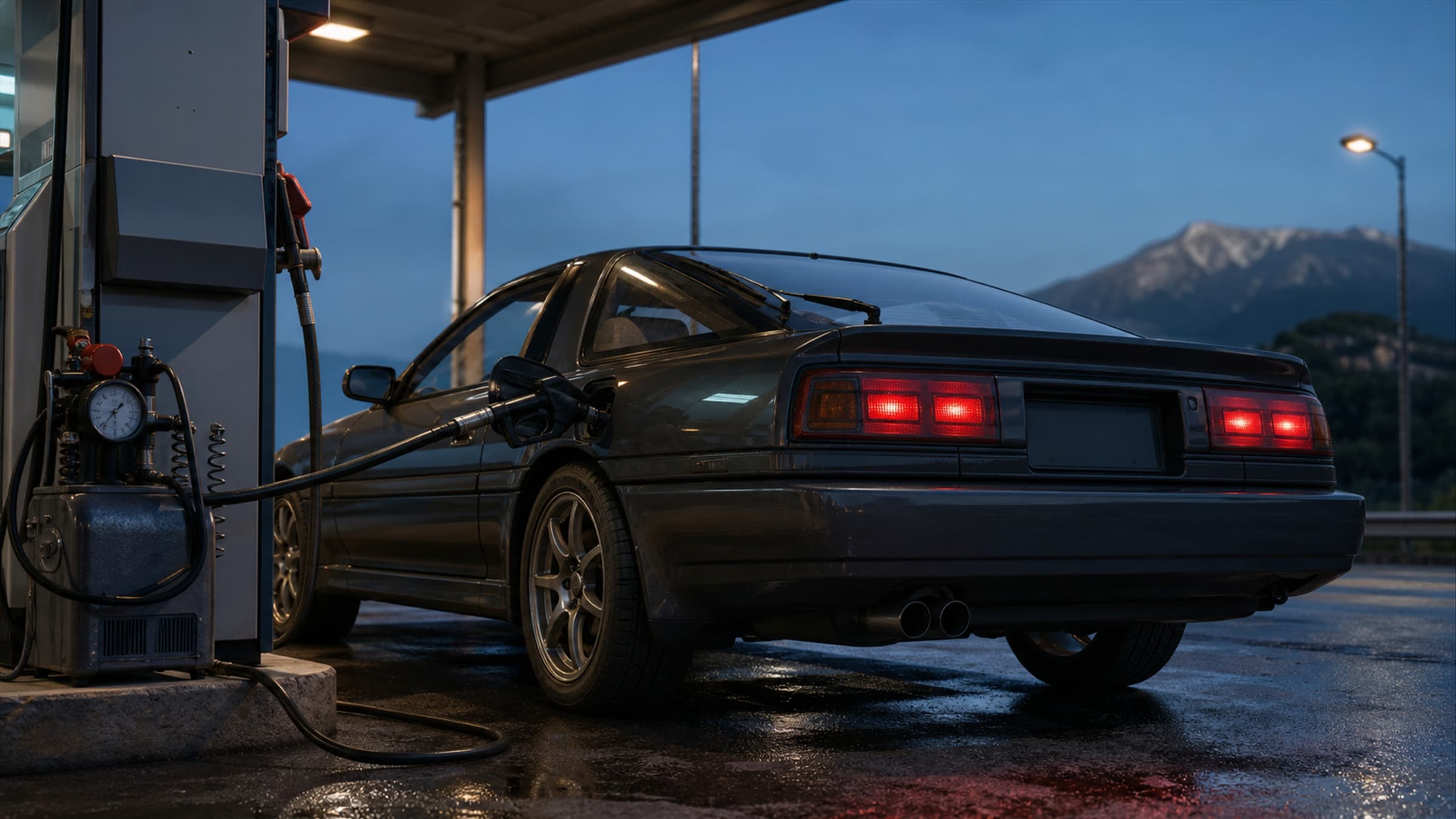
*Generated by AI.
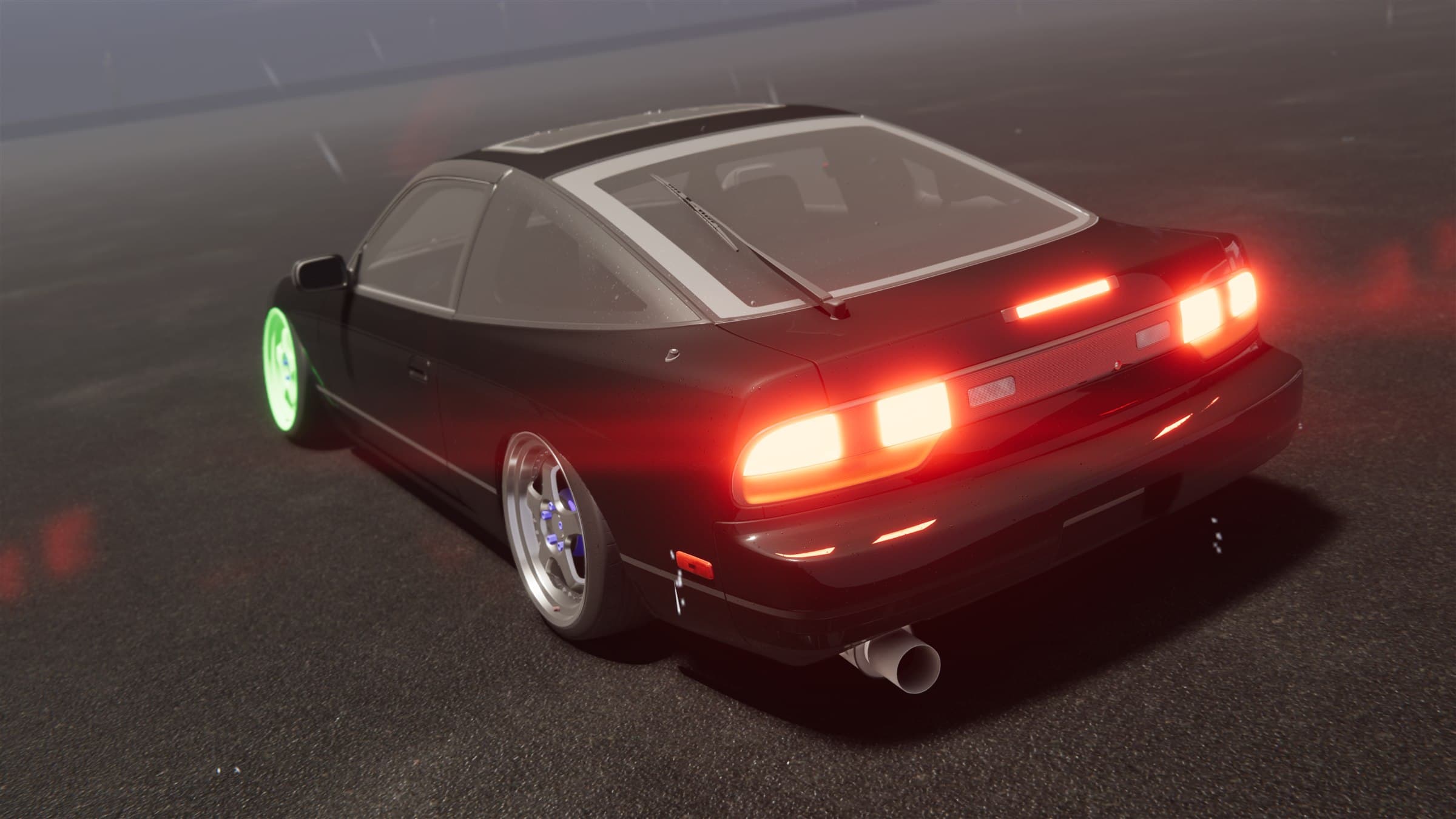
Fuel and tyres continue to change after the player leaves the garage. Fuel is consumed by the engine, tyre condition develops at each corner and gas stations provide a place to prepare the car for the next part of the drive.
Fuel follows the engine
Fuel use responds to how the engine is being driven. Idling, cruising and driving at full load do not consume the same amount. Engine configuration and tuning can also change the relationship between performance and efficiency.
Fuel has weight. A full tank adds more mass than an empty one, and that mass is reduced gradually as the car is driven. A larger tank offers more range, but it still has to be filled and carried.
When fuel becomes very low, the engine can begin to struggle. If the tank reaches empty, the engine stops. The player can buy the amount they need at a gas station rather than being forced into a full refill every time.
Choosing tyres
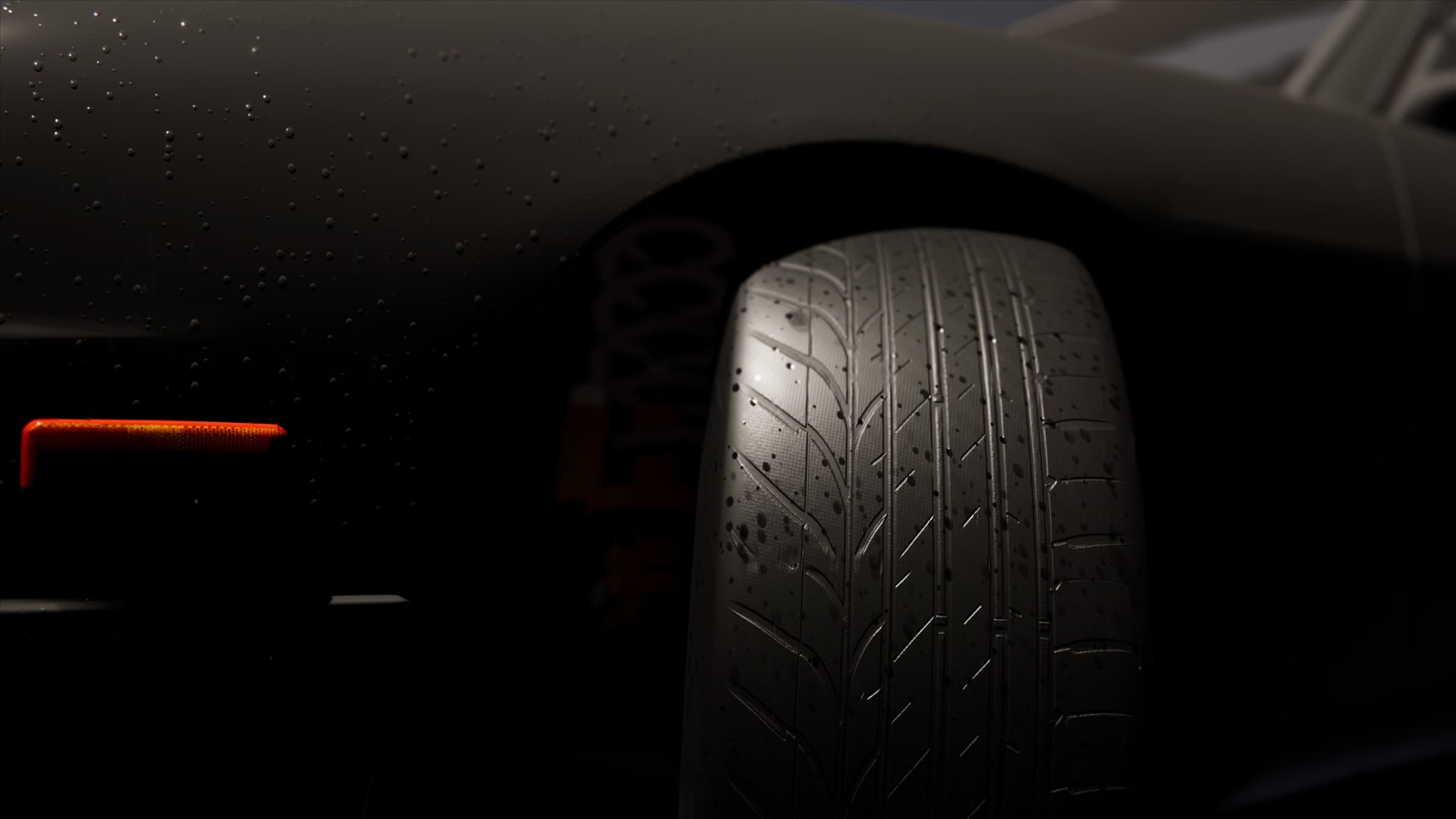
Tyre compounds are designed for different uses. A street tyre works across a broad range of temperatures and weather. Sport tyres move toward stronger dry performance. Semi-slicks and slicks become more focused, with greater demands around temperature, wear and wet roads.
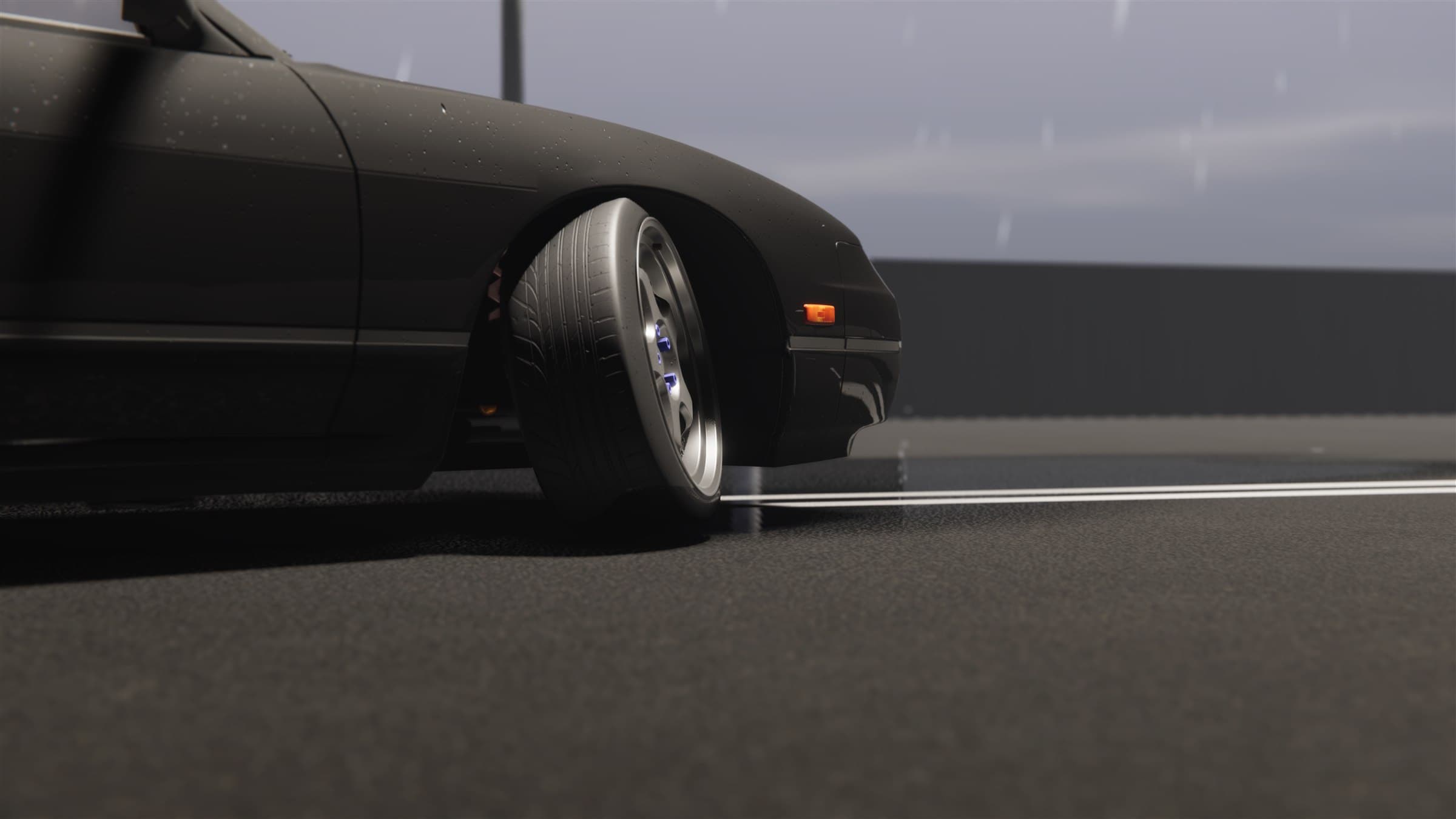
Changing compound changes both behaviour and appearance. Tread pattern, sidewall design and surface finish can belong to the fitted tyre. The marks left on the road can also reflect the compound being used.
Pressure, temperature and wear
The player chooses a cold tyre pressure, while the live pressure changes as the tyre heats. Pressure affects the shape and support of the tyre, its response to input and the way it builds temperature. Front and rear pressures can be adjusted separately to suit the car's balance.
Wear is tracked at each corner. Braking, sustained cornering, wheelspin and drifting can wear one axle—or one tyre—faster than the others. Grip falls as a tyre reaches the end of its useful life.
Wear is visible as well. Tread and sidewall materials lose their fresh appearance, worn areas develop and the tyre becomes easier to read before it fails. If durability reaches zero, the tyre can pop. That corner loses most of its tyre support and grip, making the car harder to control until the tyre is replaced.
The station as a service point
Gas stations bring fuel and tyre service together. Tyres can be fitted to the front, rear or all four corners, pressures can be adjusted and failed tyres can be replaced.
This gives longer drives some continuity. The car arrives with the fuel and tyre condition created by the journey, and the player decides what it needs before leaving again.
Fuel, compound, pressure and wear are simple decisions that remain visible in the way the car drives.
Development archive