Devlog 003 / Physics
Steering Rack
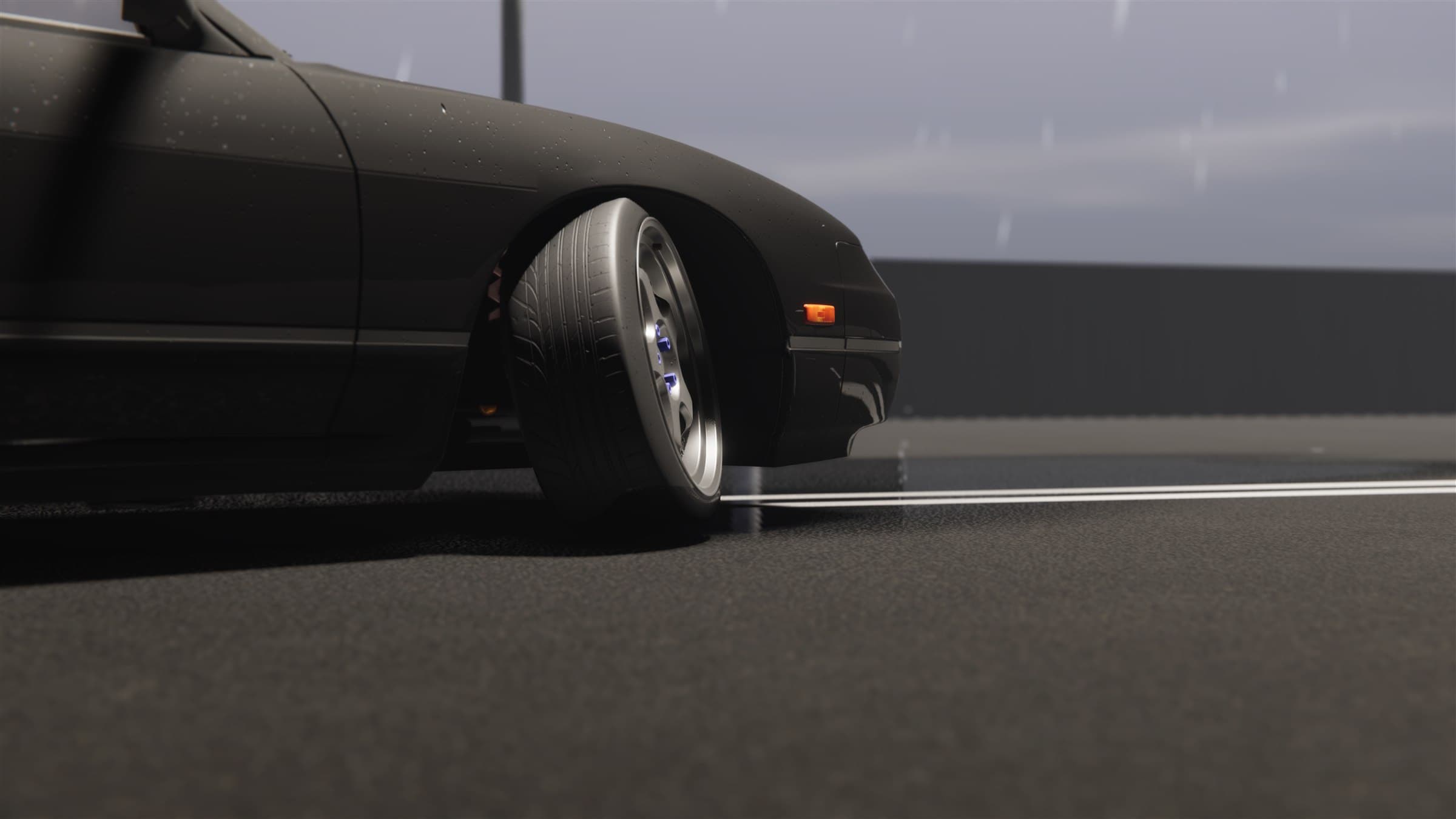
The steering rack is the connection between the driver's hands and the front wheels. It turns steering input into movement at the wheels, while the forces generated by the front tyres travel back through the same path.
From input to wheel angle
When the player turns, the steering column moves the rack. The rack moves the tie rods, and the tie rods rotate the front uprights. Steering ratio determines how much rack movement is produced by a given input, so two cars can have very different steering speed and range.
The left and right wheels also need to follow different paths through a corner. The inside wheel turns more tightly than the outside wheel, helping both tyres follow the curve instead of being dragged across it. The geometry of the rack and steering arms shapes that relationship.
Geometry changes the rack
Caster tilts the steering axis when viewed from the side. As the car moves, this helps the front wheels return toward centre and adds steering weight as cornering force builds. More caster can make the steering feel stronger and more stable, but it can also increase effort and change how the tyre leans while steering.
Camber, toe, steering-axis inclination and scrub radius also affect what the rack feels. Camber changes how the tyre meets the road. Toe changes straight-line behaviour and initial response. Scrub radius changes the leverage that braking, bumps and tyre forces have around the steering axis.
These settings are not isolated garage numbers. They change the path between the contact patch and the rack, which is why alignment can alter self-centring, steering effort, stability and feedback without changing the steering ratio itself.
The tyres push back
The front tyres create forces as they turn the car. Near the centre, the rack should feel calm. As the tyres load up, steering weight grows. When the front tyres approach their limit, that force changes, giving the driver another way to recognise understeer or a developing slide.
Road impacts and uneven surfaces can also reach the rack through the suspension and steering geometry. They are part of the same connection, not a replacement for the tyre forces underneath them.
Wheel and controller input
A steering wheel can use a wide physical range and send its movement directly to the rack. A controller has a very short stick range and no physical steering torque, so it needs a different input layer.
Controller steering is shaped around speed and available response to keep small movements useful without making the car nervous. It can also help the player unwind steering during a slide. This assistance changes how the stick reaches the rack, but it does not create extra grip or change the vehicle underneath.
Wheel and controller users therefore share the same steering geometry and tyre limits. The difference is how each device communicates with the rack.
Steering should do more than point the wheels. It should tell the driver what the front of the car is doing.
Development archive