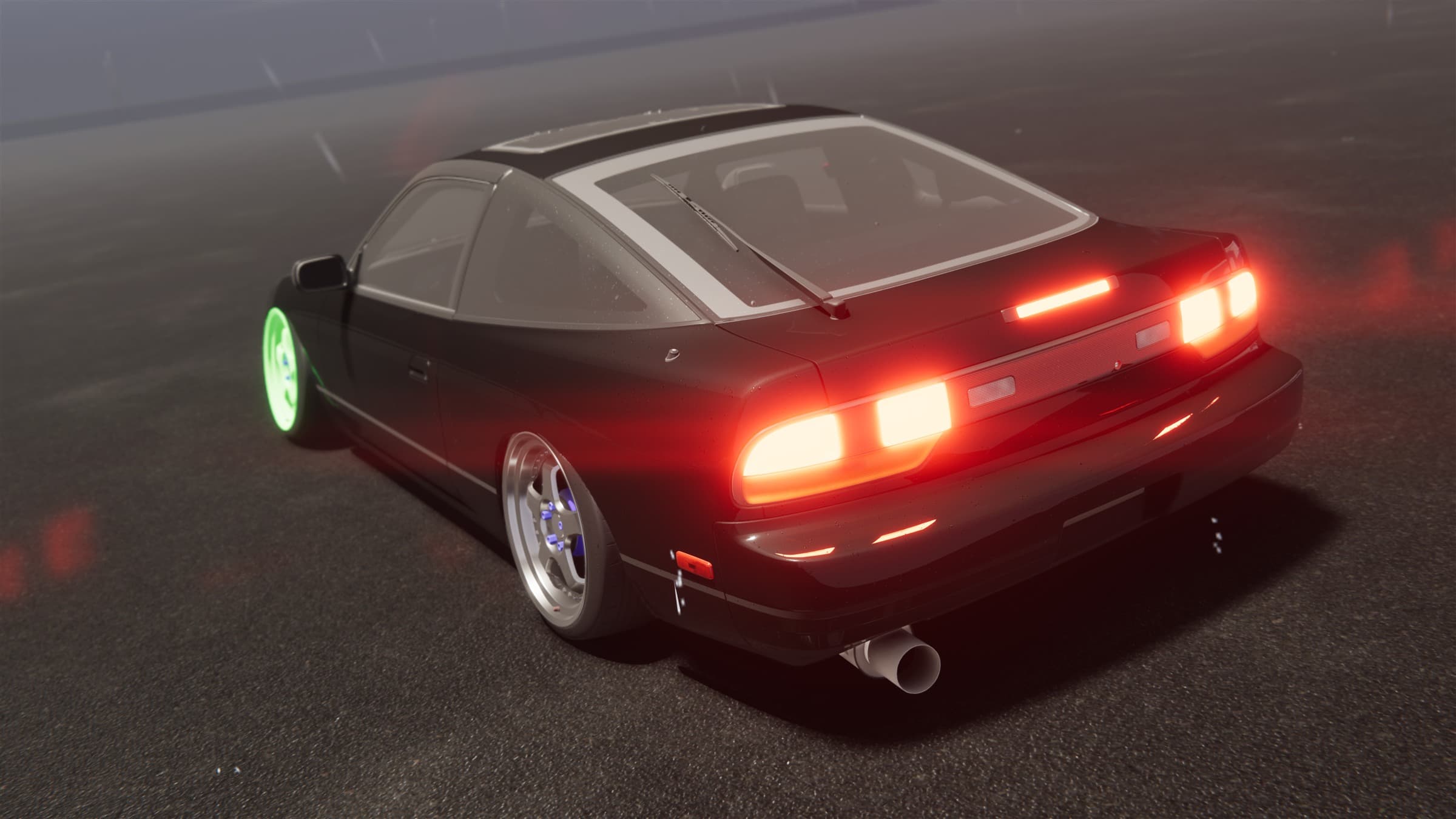
Devlog 019 / Physics
Full Simulation Physics
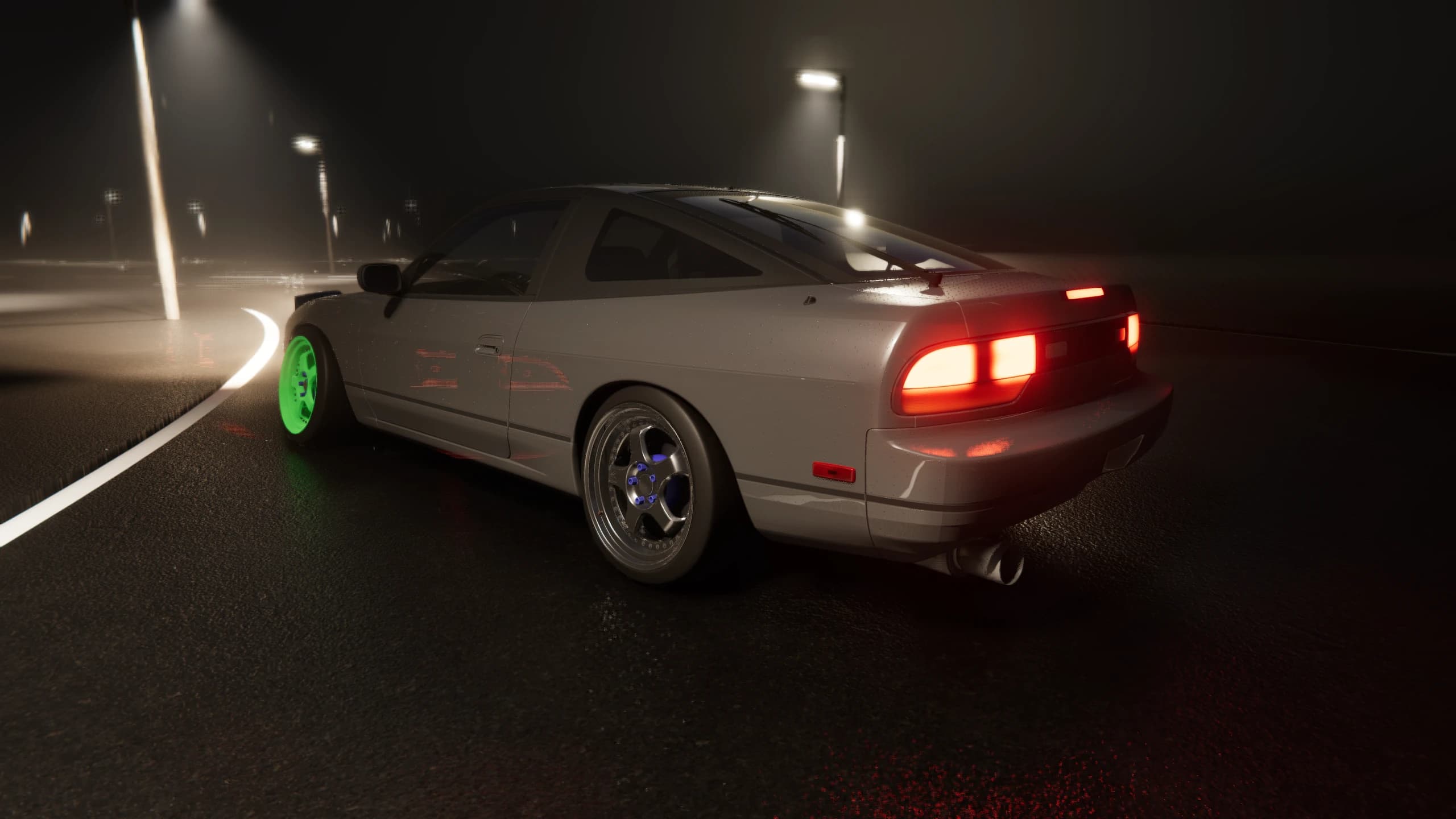
Project Tourge has always been a simcade that leans toward simulation. This update pushes that direction much further by replacing the previous vehicle behaviour with a full-simulation physics model.
During development, I used a temporary Simulation mode to isolate and test this work. That switch is not planned as an option in the finished game. The direction is simpler: these are becoming the physics of Project Tourge for every player.
This is not about making the game difficult for the sake of it. A believable car is often more enjoyable because its reactions make sense. Weight, grip, tyre condition, suspension movement and driver input should form one connected result. When the car goes wrong, the player should be able to understand why. When it goes right, it should feel earned.
Why push further toward simulation
The goal is a more enjoyable ride with a higher skill ceiling. Normal driving should still feel natural because a car behaving like a car is easier to understand than a collection of hidden assists. The difference appears when the player starts braking late, carrying more speed, using more power or asking the tyres to do several things at once.
The full-simulation model removes several shortcuts and gives the underlying systems more room to work. It rewards smooth inputs, a balanced setup and an understanding of what each corner of the car is doing. It also makes bad decisions more honest. Too much throttle, the wrong tyre pressure or a poorly controlled landing should have consequences that belong to the car rather than feeling like a scripted punishment.
More physics work, more often
The new vehicle simulation solves the most important systems at a much higher frequency. With the game running its standard physics clock at 50 Hz, the tyres and drivetrain are internally updated at 500 Hz.
That extra resolution matters during fast changes: a tyre touching an uneven surface, a wheel beginning to spin, a suspension corner taking a sharp impact or the drivetrain changing load. The car can follow those events in smaller steps instead of trying to describe the entire change at once.
Collision handling is also given more attention. At high speed, the aim is to preserve the motion and forces of the car through contact instead of allowing a short frame or a small obstacle to create an unpredictable result.
A contact patch instead of one contact point
A real tyre meets the road across an area. The new tyre model treats that footprint as a distributed contact rather than asking one point to represent the complete tyre.
Different parts of the footprint can meet slightly different road positions and surface angles. The load is spread across those contacts, and camber can move pressure toward the inner or outer shoulder. The size and shape of the working footprint also respond to tyre width, pressure and the load carried by that corner.
This gives uneven roads, kerbs, tyre setup and alignment a clearer relationship with the forces reaching the car. It is especially useful when only part of a tyre is supported or when the road beneath it is not perfectly flat.
Grip that survives the transition into a slide
Acceleration, braking and cornering do not receive separate unlimited reserves of grip. The tyre model calculates longitudinal and lateral behaviour together, then keeps their combined demand within what the tyre can actually provide.
When the player adds throttle during a corner, the driven tyres have to divide their ability between turning and accelerating. Braking while turning creates the same problem in another direction. If the total request is too high, the tyre moves progressively into a slide.
The important part is what happens after that limit. Grip does not simply disappear. The tyre transitions toward its sliding behaviour, allowing a drift, lock-up or powerslide to remain physical and readable. Power and braking follow the same rules, without keeping extra braking grip purely to make a drift easier.
Tyres need time to react
Tyre force no longer appears instantly when the steering wheel moves. The tread and the slower tyre structure deform as load builds, creating a short but important delay between an input and the complete force reaching the car.
That delay changes with the live contact patch and driving conditions. It helps give steering a sense of buildup, makes fast direction changes less artificial and allows the car to settle through a transition instead of snapping immediately from one state to another.
This work also improves how large slip angles are represented. A tyre travelling heavily sideways is treated as a tyre in a genuine slide, not as a special case that loses the behaviour built up in its tread and carcass.
Tyre moments reach the driver
Tyres do more than push the car forward and sideways. They also create moments around the wheel as the contact patch moves, loads and deforms.
The simulation includes self-aligning behaviour, overturning response from load and camber, and rolling resistance at the tyre. For supported steering-wheel hardware, force feedback can use the tyre's calculated aligning response. The steering wheel is therefore connected more directly to what the front contact patches are doing.
This should make the approach to the limit easier to read without making it easier to exploit. A direct-drive wheel can communicate more detail, but the player still has to react correctly to that information.
Each part of the tyre has its own temperature
One temperature cannot describe an entire tyre. Each corner now tracks the inner, centre and outer tread, along with the slower temperature of the tyre structure beneath them.
Heat is created where the tyre is actually working. If the outside shoulder is being overloaded, it can heat and lose performance locally instead of fading the whole tyre by the same amount. Heat also moves between the tread bands and into the carcass, while airflow, normal rolling and rain help cool the tyre.
Temperature and pressure are connected. As the tyre heats, its pressure changes. That pressure then affects its footprint, effective size, rolling resistance and the way it continues to generate heat. Alignment, pressure and driving style can now leave a visible pattern across the tyre rather than producing one general number.
Suspension, tyre deflection and wheel hop
Road movement is now divided between suspension travel and physical tyre deflection. Each corner includes the behaviour of the mass carried below the suspension, along with the vertical stiffness and damping of the tyre.
This allows sharp road inputs to compress the tyre before every part of the movement reaches the body. It can also produce wheel hop when the tyre, suspension and road begin working against each other. Springs, dampers, preload and bump stops remain connected through the same suspension response, so the corner behaves as one system.
Kerbs and sudden surface changes are no longer softened by the previous compression shortcut. The solved road contact reaches the suspension directly. That makes the result more demanding, but it also gives suspension setup and tyre pressure a real job to do.
Low speed without invisible help
Some of the hardest tyre problems happen while the car is barely moving. Earlier behaviour could allow a parked wheel to rotate, produce smoke or make the car move forward and backward as tiny forces repeatedly changed direction.
The new model handles very low-speed contact as a physical relationship between wheel rotation and movement at the tyre. Rolling resistance fades cleanly as the wheel stops, stored tyre deformation settles, and unwanted low-speed ringing is damped without affecting normal driving.
This is not an invisible auto-hold. The brakes still have to create enough force to hold the car, including on a slope. If engine torque, brake demand or available grip cannot support the situation, the tyre is allowed to slip.
Brakes, clutch and engine responsibility
Brake input now builds and releases hydraulic pressure over time rather than creating the requested braking torque instantly. The response is still fast, but it has progression. This gives threshold braking more shape and makes brake control part of the driving rather than a simple on-or-off request.
When stalling is enabled, the engine receives no hidden throttle or automatic restart input. A stalled engine is the result of what happened between the engine, clutch and driver. Hardware clutch pedals also connect without the smoothing needed to make keyboard and controller clutch input usable.
Controller steering shaping has deliberately not changed with this update. The deeper physics should not make controller steering unnecessarily hostile or replace the steering rack with an assist.
Aerodynamics follow the car's direction
Aerodynamic behaviour now pays attention to how the car is moving through the air, not only how fast it is travelling overall.
Frontal and sideways drag are treated separately. Sideways motion can resist the car and influence yaw, while downforce follows forward speed and reduces as the car presents a larger angle to the airflow. Ride height and altitude also affect the result, and air becomes less dense as elevation increases.
This matters most when speed and instability meet. A car moving sideways at high speed should not receive the same aerodynamic support as one travelling cleanly in the direction it was designed to face.
Built to be inspected and improved
The new systems are supported by development views for contact positions, tyre forces, moments, deformation, temperature and suspension state. Live tyre footprints show the temperature across all four corners, making it possible to see whether the behaviour on the road matches what the model reports.
Telemetry recording also provides a path for comparing the simulation with synchronized real-car data. That does not mean every vehicle is already backed by a complete measured dataset. It means the structure exists to replace estimates with traceable information as better data becomes available.
What the player should feel
The result should not be a list of systems that only looks impressive in a menu. It should be a car that takes a set, loads its tyres, communicates through the steering and asks the player to respect speed, power and surface changes.
A smooth driver should be able to place the car more accurately. A good setup should survive longer and use the tyre more evenly. A powerful car should require throttle control. A badly prepared car should not become safe because the game quietly corrects it.
This is not a separate hardcore preset. It is the physics direction for Project Tourge.
The original idea remains intact: casual driving can still be enjoyable because the car behaves naturally, but performance is earned through knowledge, setup and skill. A player can simply get in and drive. The deeper they push, the more the full simulation asks them to understand the car beneath them.
Development archive