Devlog 016 / Audio
Music for the Drive
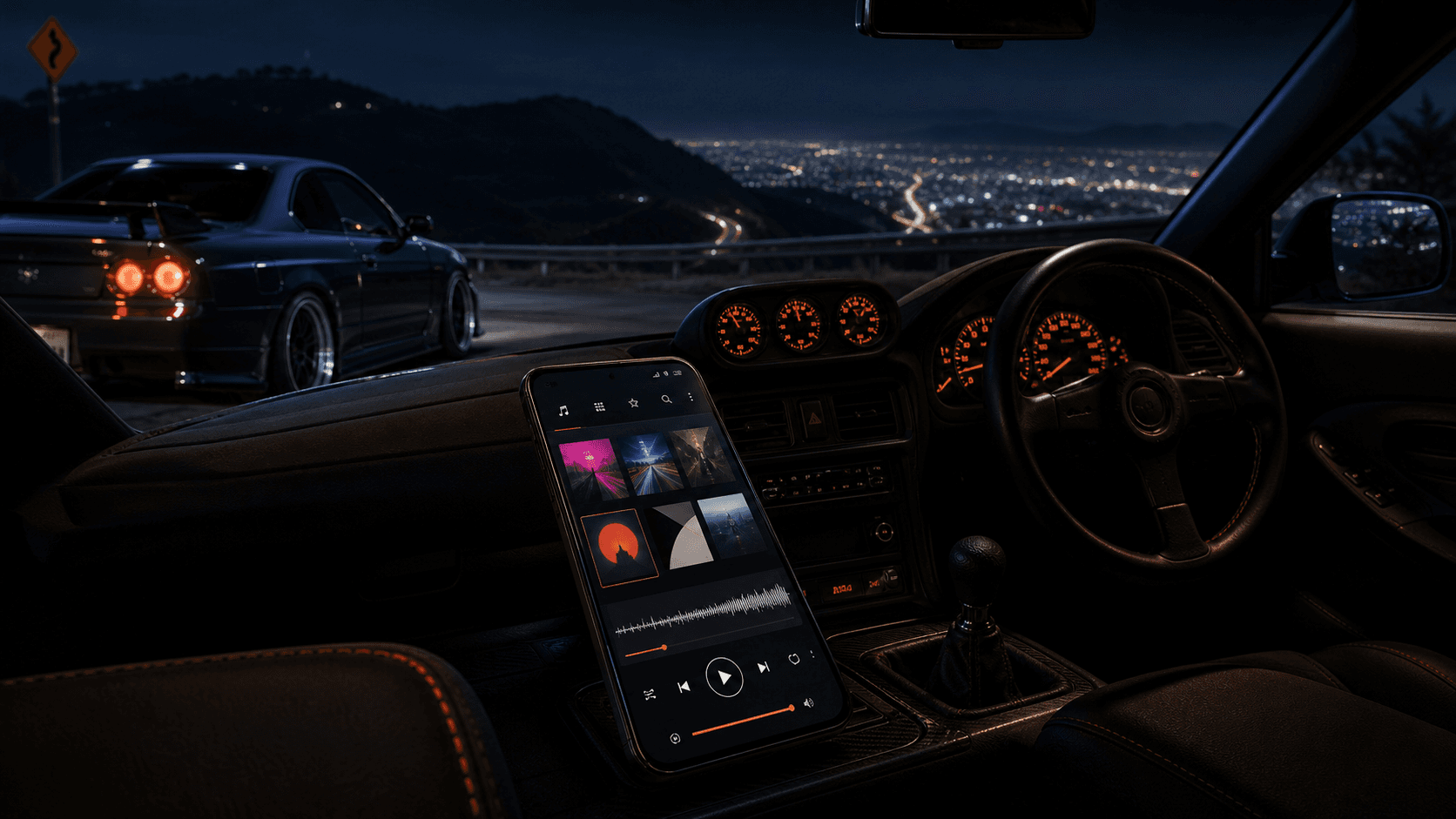
*Generated by AI.
Music is a major part of any game built around cars and an open road. A good soundtrack can give a late-night highway run its identity, fill the quiet space between corners and turn an ordinary drive across the map into something a player remembers.
For Project Tourge, the direction is simple: it should feel like car music. Different albums can have different sounds, energy and personality, but every one of them should make sense beside an engine, a road and a drive. That is the taste behind the soundtrack. End of story.
Albums with different moods
The music library is organized into stations and albums rather than one enormous list with no identity. Each collection can offer a different side of the same car-focused direction: something heavier for an aggressive build, something calmer for a night cruise, or something with enough energy to sit behind a long drift session.
The aim is not to force every player into the same narrow genre. It is to create different flavours that still belong to the world of Project Tourge. Album artwork and individual track covers help each collection feel deliberate instead of looking like a folder of unrelated audio files.
The library can continue growing with the game. New albums give us room to explore another mood without replacing the music that already fits a player's taste.
The phone music app
The Music app is the player's control over the soundtrack. It shows the current track and artwork, available stations, the songs inside the selected station and the progress of whatever is playing.
Players can choose a station or an individual track, pause and resume playback, move backward or forward, seek to another part of a song and turn shuffle on or off. The goal is to give the expected controls without pulling the player into a separate external player or a large settings menu.
Music continues when the phone closes. Opening another app or moving between supported areas does not begin the album again, because the app controls one persistent music player running through the session. The selected station is remembered as well, so the game does not repeatedly push the player back to a default choice.
That persistence sounds like a small detail, but it changes how the soundtrack feels. The music belongs to the drive rather than to the screen that started it.
Listening together in multiplayer
Players can synchronize their music with someone else in the same multiplayer session. Selecting another player as the music source makes the local music app follow their station, current track, playback position, play or pause state and shuffle choice.
This turns the soundtrack into something the group can share. One player can choose the album for a cruise or meet, while everyone who decides to sync hears the same part of the same track instead of starting it separately and slowly drifting apart.
Following another player is always a local choice. It does not interrupt them or require them to accept a request, and every listener keeps control of their own music volume. While synchronized, playback follows the selected player. Unsyncing returns normal controls and leaves the current song playing from its present position, so leaving the shared session does not abruptly restart the music.
Made with Suno—for now
Every piece of music currently available in Project Tourge was made with Suno. This applies to the entire available soundtrack—not only selected albums or a few temporary tracks. It is not something we want to hide behind vague wording such as “original music” while avoiding how it was produced. AI is part of the current music pipeline, and players deserve to know that clearly.
Project Tourge currently has effectively no music budget. It is a one-person game with no composer, recording studio or budget for a large licensed soundtrack. In that situation, the realistic options are extremely limited. Suno allows music to be created around the atmosphere and needs of the game instead of relying entirely on generic free tracks that were never intended for it.
The output is still chosen around a direction. The albums are built to serve particular driving moods and are selected for whether they fit Project Tourge. The reason for using Suno is not to pretend music has no value—it is the opposite. Music matters enough to the experience that leaving the game silent or filling it with random placeholder tracks would be the worse result for the project right now.
This may evolve if the project eventually has the budget and opportunities to work differently. “For now” is important: it describes the current reality, not a claim about how every piece of music must be produced forever.
If AI music is not for you
We understand that some players do not want AI-generated material in the games they support. Being transparent will not make everyone comfortable with it, but hiding it would be worse.
The music can be turned down or disabled. Players who would rather hear only the car, the tyres and the world can do exactly that. The soundtrack is intended to add to the drive, never to become a requirement for playing the game.
We are also considering support for importing custom music in the future. That could let players bring their own library into the music app while keeping its playback controls and persistence. It is only an idea at this stage, not a promised feature: file formats, platform restrictions, library management and the amount of development work still need to be understood first.
For the current project, the approach is honest and practical: use the tools available, create music for the kind of driving Project Tourge is about, organize it with care and always give the player control over whether they want to hear it.
Different albums, different moods—always music made for cars and the road around them.
Development archive